If you’ve been living with POI (Premature Ovarian Insufficiency), chances are you’ve encountered a lineup of medications with names that sound like a fantasy novel’s spellbook. I remember my doctor saying things like “Follistim” and “Ganirelix,” and thinking: Okay, cool, but what do they actually do?
So, I thought I would give a little breakdown of what these meds are, what they’re trying to help your body do, and how they fit into fertility treatment. No fluff, no med school jargon, just the basics.

Follistim (a.k.a. the Follicle Cheerleader)
Think of Follistim as the hormonal megaphone that tells your ovaries, “Let’s go follicles, let’s go!”
It’s a form of recombinant FSH (follicle-stimulating hormone), which encourages your ovaries to develop multiple follicles (aka the little fluid sacs that hopefully contain eggs). In people with POI, this is like whispering to a stubborn crowd, you’re just hoping someone listens. This shot is definitely the easiest to give.
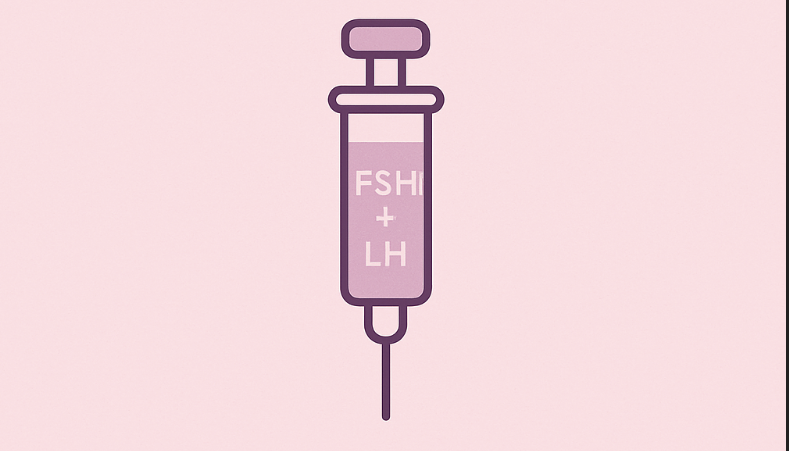
Menopur (FSH + LH for an Extra Nudge)
Menopur is kind of like Follistim’s cousin. It contains FSH and LH (luteinizing hormone). LH helps with the final maturation of the egg and supports estrogen production, so it’s often added when your body needs a little extra nudge on both fronts. Yes, the shot is a little uncomfortable going in. No, that doesn’t mean it’s not working.

Dexamethasone (Calm-Down Cortisol)
This one’s a steroid, unfortunately not the muscle building kind, but the kind that suppresses immune responses and reduces inflammation. Some of us with very low egg counts have antibodies (proteins) directed against the ovaries. In fertility treatment, dexamethasone can help lower these proteins as well as androgens (like testosterone), especially in people with elevated levels or certain adrenal conditions. Basically, it’s there to help get your body to optimal conditions to grow follicles.

Clomid (Clomiphene Citrate) (The Ovulation Gatekeeper)
Clomid is often one of the first meds thrown into the fertility mix. There are a few different kinds of medicine like this one, but they work relatively the same. Clomid works by blocking estrogen receptors in the brain, tricking your body into thinking estrogen levels are low, which then makes your brain yell, “Quick, send more FSH and LH!” The goal is to get those follicles growing. Side effects? Mood swings, hot flashes, and a strong desire to cry when watching anything remotely sad. You’ve been warned.
Ganirelix (The Follicle Traffic Light)
This one sounds intense because it is. Ganirelix is a GnRH antagonist, which means it stops your body from ovulating too early. When you’re stimulating follicles with meds like Follistim and Menopur, timing is everything. Ganirelix jumps in like, “Whoa there! Not yet!” so your body doesn’t release the egg before your doctor can retrieve it. This is usually taken towards the end of a cycle.

Trigger Shot (The Go-Time Button)
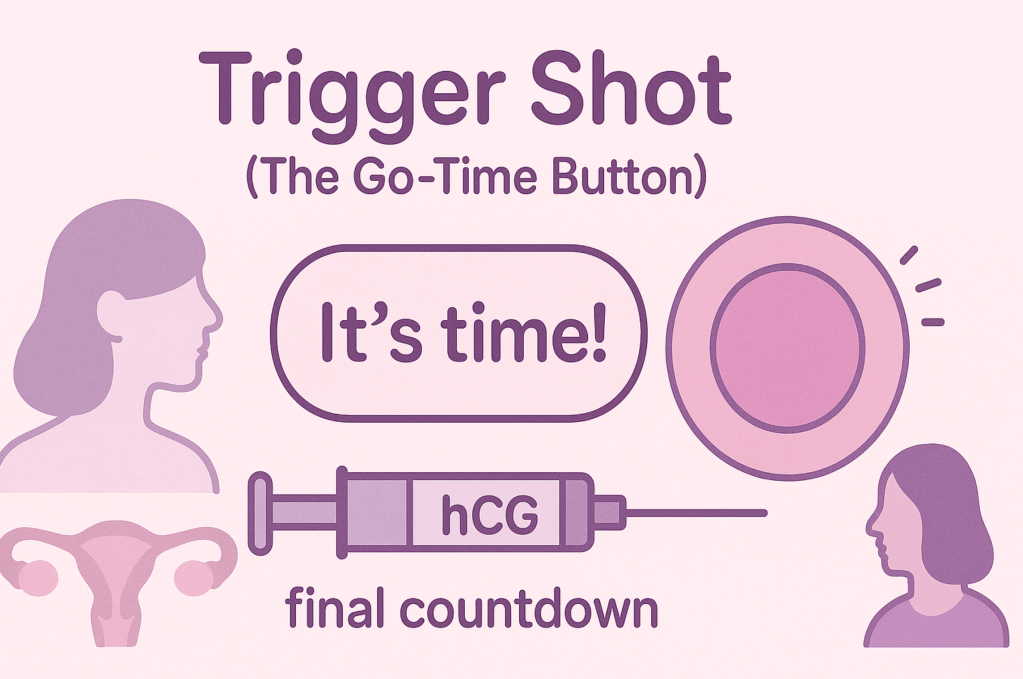
Once your follicles are looking nice and big, it’s time for the trigger shot. Usually hCG (human chorionic gonadotropin), it mimics the LH surge that tells your ovary to mature and release the egg. This is the final countdown: ovulation will usually happen about 36 hours after this injection so the retrieval is performed just before ovulation would occur. This way, the most mature eggs (those that will fertilize in the future) will be obtained.
Introduction
So here’s something I never thought I’d be typing out: I’m 19 years old, in college… and I’ve been diagnosed with Premature Ovarian Insufficiency (POI). If you’ve never heard of that before, welcome to the club, I hadn’t either. Basically, my ovaries decided to clock out early, and that’s led to a lot of conversations…

 Living with Premature Ovarian Insufficiency (POI)
Leave a comment