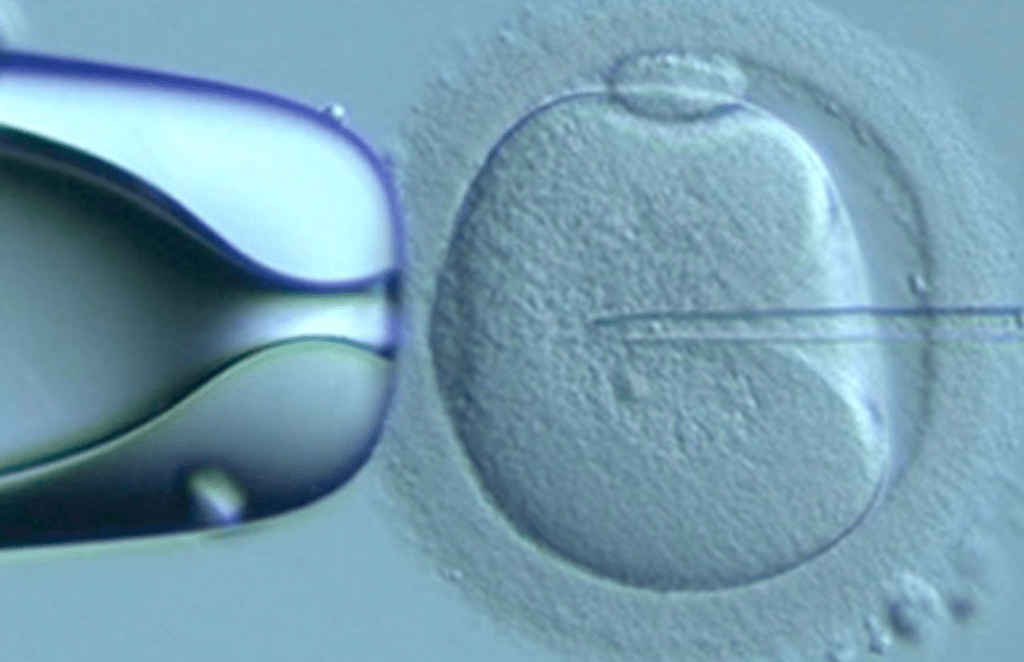
If you’ve ever heard someone talk about egg retrieval, maybe you imagined some sci-fi lab situation with test tubes and robots. And honestly? You’re not that far off, but the why behind it is super real, and actually kind of empowering.
So let’s break it down:
What’s the point of egg retrieval? Who even gets it? And what happens to the eggs after they’re taken out?
First Off: What Even Is Egg Retrieval?
Egg retrieval is when a doctor goes in (with a tiny needle under anesthesia, so no worries) and collects eggs from your ovaries. These eggs get frozen or fertilized depending on your plan. It sounds wild, but it’s actually really common, especially for people who want kids someday but aren’t quite ready right now.
Maybe you’re focused on school, a career, your mental health, or just… not feeling like a parent yet (totally valid). The thing is, your eggs don’t wait. As you get older, both the quality and quantity of your eggs start to dip, especially after your mid-30s. So if you think future-you might want a kid, freezing eggs now is kind of like hitting pause on your biological clock.

Okay, Cool. So You Got the Eggs—Now What?
Fast forward to the day you do want to use your frozen eggs. The next step is fertilization (aka combining the egg with sperm to try and make an embryo). There are two main ways this happens, and yes, both sound like something out of a science documentary:

1. Conventional Fertilization (The Chill Approach)
This is when the lab techs take your eggs, put them in a petri dish with some sperm (usually from a partner or donor), and just… let them do their thing. No one’s forcing anything—it’s like, “Hey y’all, here’s a cozy dish, go find your match.” If the sperm are strong and the eggs are healthy, some will naturally fertilize on their own. The only catch is that conventional fertilization can only happen before the eggs are frozen, so in that case, you’d be freezing embryos, not eggs. Once eggs are cryopreserved, a different method has to be used to fertilize them later on.
Success rates: When using fresh eggs and healthy sperm, fertilization rates with this method tend to range from 50–70%, depending on age and other factors. It’s simple, but not always predictable.
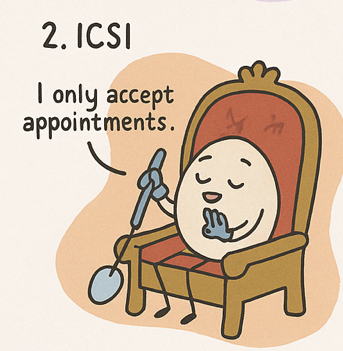
2. ICSI (The Hands-On, Super Precise Option)
ICSI (pronounced ick-see) stands for Intracytoplasmic Sperm Injection. Yes, it’s a mouthful. This is where a highly trained embryologist literally takes one sperm and injects it directly into one egg. Like, under a fancy microscope, with tiny tools and serious skills.
This method is usually used if sperm count is low, motility is off, or if fertilization didn’t work with the chill method. It’s super controlled, and honestly kind of amazing.Success rates: ICSI has fertilization rates of 70–85%, and it’s especially helpful when sperm-related issues are involved or when working with previously frozen eggs.
Final Thoughts
Egg retrieval isn’t just for people going through IVF, it’s for anyone who wants to have more control over their fertility timeline. Whether you’re planning ahead or dealing with medical stuff that could affect your future fertility, retrieval lets you hit save on your younger, healthier eggs for later.
Also, no matter how the fertilization goes down (natural-style or ICSI-style), the whole point is to give you more options. Because life doesn’t always go according to plan—and that’s okay.
If you’ve gone through retrieval or are thinking about it, I’d love to hear your story. Or if this just made your brain go “!!!” and you have questions—drop them in the comments. I got you.

 Living with Premature Ovarian Insufficiency (POI)
Leave a comment